
 uk


What Offline Learning Is
Offline (in-person) learning is a format with classes at a fixed place and time, where the instructor and students interact with each other directly.
This format has several significant advantages that are difficult to fully replicate at a distance.
Advantages of the Offline Format:
- Instant feedback. The instructor immediately sees who is struggling with a topic and can adjust the explanation on the spot.
- Live interaction and networking. Making connections, joint projects, and exchanging experience with classmates are hard to replace with communication through a screen.
- Discipline. When a class is tied to a specific time and place, it is harder to “put off until tomorrow.”
- Practice with real equipment. For fields where physical presence matters (laboratories, workshops, some technical specialties), offline is often irreplaceable.
At the same time, the format also has a downside worth knowing about in advance.
Disadvantages:
- Being tied to a schedule and location. Difficult to combine with work or other commitments.
- Additional costs. Travel, and sometimes accommodation or food.
- A missed lecture is harder to make up for than simply watching a recording (although more and more institutions now video-record or livestream their in-person classes).
What Online Learning Is
Online learning is a format in which all materials, lectures, and communication are concentrated on the internet: on interactive platforms, in webinars, video lessons, and support chats. You gain access to learning materials regardless of where you are.
This format primarily appeals to those who value the freedom to choose the time and place of their studies.
Advantages of the Online Format:
- Flexibility. You can study from anywhere — from home, while traveling, or from temporary housing.
- Your own pace. Recordings of classes are usually saved, so you can watch a difficult topic as many times as you need.
- A lower barrier to entry. No need to spend money and time on travel.
- More personal space (although this also has a flip side, which we’ll mention in the disadvantages). You study in a comfortable home environment without noise, traffic, or the need to be in a large group every day.
But this freedom comes with certain challenges that are not always obvious at the start.
Disadvantages:
- Getting locked into a “comfort zone.” When you don’t need to go out and speak in front of a group every day, it’s easy to lose the skill of live communication and to fail to overcome the fear of public speaking.
- Self-discipline is required. Without a clear schedule, it’s easy to postpone studying “for later.”
- Less live contact with the instructor and the group.
- Dependence on technical conditions. Stable internet, a device, and a quiet place to concentrate.
- Practice depends on the specialty. For programming, design, marketing, or languages, the online format can provide full-fledged practice, but where physical equipment or work in a real environment is needed, online opportunities are limited.

Myths About Online Learning
There are still common stereotypes surrounding the online format, which we will dispel:
- “Online learning has no value for employers.” The value of a program depends not only on its format, but also on the content of the curriculum, the quality of preparation, practical skills, and what the student can demonstrate after completing it.
- “Online is easier.” On the contrary: the distance format requires greater self-organization than in-person learning with a structured schedule.
- “Online, you’re left alone with the material.” This is an outdated myth. Today, online courses are built around a community: you work in groups, discuss assignments in chats, and have regular calls with a mentor for feedback.
Hybrid: Combining Formats
The hybrid model combines online and offline classes: students can master theory remotely, while going through practice, discussions, and projects in person. This approach allows you to combine the flexibility of the distance format with the value of live interaction — and in many programs it is gradually becoming one of the main ways of organizing learning.
How Technology Is Changing the Difference Between Formats
AI assistants and digital tools are now actively used in learning regardless of format. In online education, in particular, they help take notes on material, practice language, and get explanations of complex topics outside of class hours. Virtual and augmented reality labs (VR/AR) partially close the gap between formats, recreating practical experience in areas where it used to be possible only offline.
This does not erase the difference between formats entirely, but it does partially narrow it. Practice, visual demonstration, and individual support, which used to be harder to organize remotely, are now more often available online as well.
Comparison Table
To visually compare the formats by key criteria, let’s bring them together in one table.
| Criterion | Online | Offline | Hybrid |
| Cost | Depends on the program | Depends on the program | Depends on the program |
| Schedule flexibility | High | Low | High |
| Practice | Depends on the specialty | High | High |
| Live communication | Less | More | More |
| Self-discipline requirements | High | Lower | Medium |
| Technical requirements | Stable internet, a device | Minimal | Stable internet for the online part |
| Knowledge assessment | Tests, online assignments, sometimes projects | Live exams, project defenses | A combination of online and in-person forms |
| Location dependency | None | Yes | Partial |
Which Format to Choose: Specific Guidelines
Instead of the general “online = flexibility, offline = discipline,” it’s worth looking at your own situation:
- You work full-time or have an irregular schedule → online or hybrid.
- It’s hard for you to organize your studies on your own without external structure → offline.
- You need to work with real equipment or environment → offline.
- You live far from the training center or move frequently → online.
- Making connections, teamwork, and the atmosphere of a group matter to you → offline or hybrid.
- You need maximum freedom in choosing your time and pace → online.
- You want to combine structure with flexibility → hybrid.
Do You Have to Pay for Training?
Free programs exist in both formats, but the conditions for participation differ significantly. Online courses with free access are more often available to a wider circle of people regardless of location, although they may have selection requirements or a set duration. Offline programs, on the other hand, are usually tied to a specific city and have a limited number of places — but in return, they offer something that is hard to replace remotely: live support, practice, and group support.
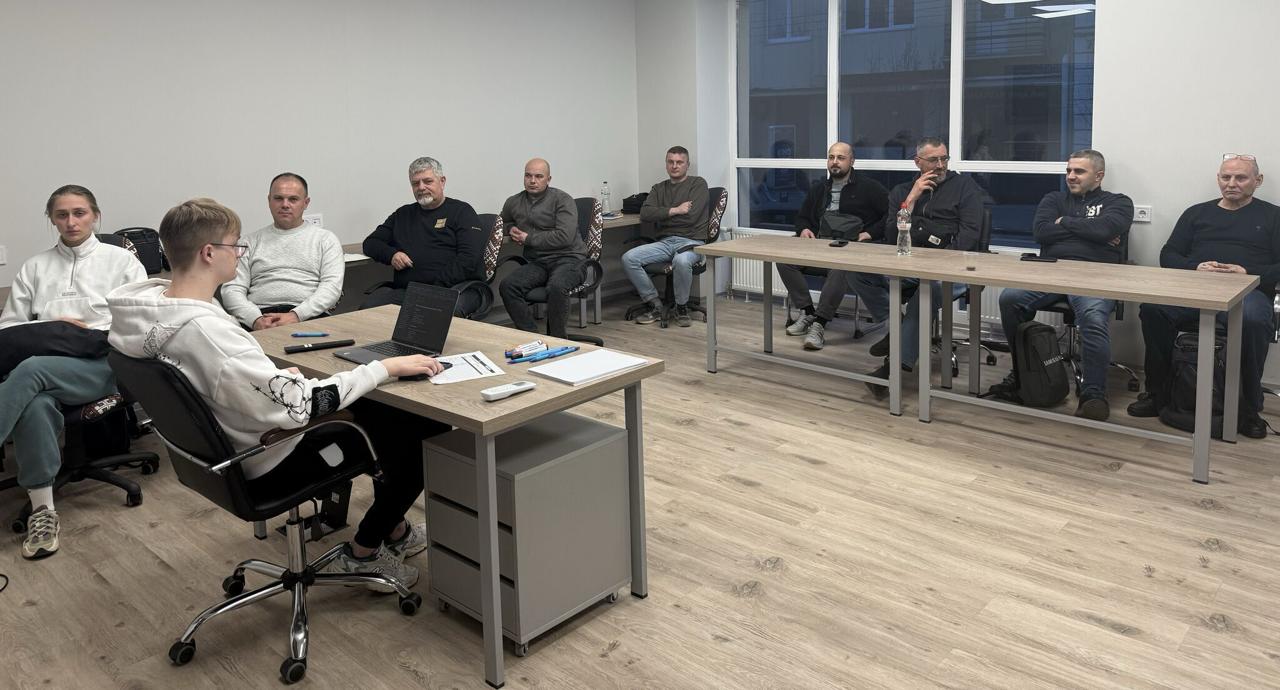
For example, the Academy for Heroes offers free offline courses for veterans and their family members in Lviv — at 3 Yevhena Petrushevycha Square and at 26 Rynok Square. This format makes it possible to study in a group, receive live support from instructors, and immediately apply knowledge in practice. This is especially valuable if you are mastering a new profession or field.
Conclusion
There is no universal learning format. Some people find it more convenient to study online at their own pace, some need classroom sessions and live communication, and some are suited by a combination of both options. So choose the format that matches your schedule and capabilities and will help you reach the result you want!

